The Best Credit Cards for Grocery Shopping (And the Mistake That Could Cost You All Your Points)
Turn your weekly grocery run into your next free flight or hotel stay. Here’s which cards actually earn the most at the supermarket, and the sneaky rule that trips almost everyone up.
Disclaimer: This post contains affiliate and referral links. If you apply through our links, we may receive a bonus or commission at no extra cost to you.
The Best Credit Cards for Grocery Shopping
If you’ve looked at your grocery receipt lately and felt your stomach drop a little, you’re not alone. Food is one of the biggest line items in almost every household budget, and it’s not exactly optional.
Here’s the silver lining, though: groceries are also one of the easiest categories to turn into serious points and miles. You’re already buying the food. The only question is whether you’re using a card that’s actually rewarding you for it, or just handing your bank a stack of receipts and a debit swipe for nothing.
Below are the cards worth having in your wallet for grocery runs, plus one rule that catches almost everyone off guard the first time they try to maximize this category.
A Quick Look at the Top Cards
| Card | What You Earn on Groceries | Annual Fee |
|---|---|---|
| American Express® Gold Card | 4x Membership Rewards® points at U.S. supermarkets (up to $25,000/year) | $325 |
| Blue Cash Preferred® Card from American Express | 6% cash back at U.S. supermarkets (up to $6,000/year) | $0 intro the first year, then $95 |
| Capital One Savor Cash Rewards Credit Card | 3% cash back on groceries, no cap | $0 |
| Chase Sapphire Preferred® Card | 3x points on online grocery orders | $95 |
| Chase Freedom Flex® | 5% cash back on up to $1,500/quarter when groceries are a bonus category (must activate) | $0 |
| Citi Strata Premier® Card | 3x ThankYou® Points at supermarkets | $95 |
Amex Gold: The One We’d Grab for Travel Points
The Amex Gold card earns 4x Membership Rewards points at U.S. supermarkets on up to $25,000 in spending a year, then drops to 1x after that. The $325 annual fee scares people off at first glance, but do the math on your actual grocery bill before you write it off.
Spend $200 a week on food and this card alone hands you over 41,000 points a year, just from stuff you were buying anyway. That’s real money toward a business class seat or a stretch of Hyatt nights, not a rounding error.
Blue Cash Preferred: Best If You Just Want Cash Back
Not everyone wants to deal with transfer partners and award charts, and that’s fine. The Blue Cash Preferred card pays 6% cash back at supermarkets on the first $6,000 you spend each year, which works out to $360 back if you hit the cap. It has no annual fee the first year, then $95 after that, so it basically pays for itself with a couple months of normal grocery spending.
Capital One Savor: No Cap, No Games
If you’ve got a big family and you blow past $6,000 a year on groceries without even trying, the Savor card is worth a look. It earns 3% cash back on groceries with no ceiling and no annual fee. It won’t out-earn the Amex Gold or Blue Cash Preferred at lower spending levels, but once you’re past their caps, this card just keeps earning.
One thing worth knowing if you’re already a Capital One person: pair the Savor with the Venture X, and you can move that cash back over as transferable miles instead. Suddenly your grocery card is functioning like a travel card.
Chase Sapphire Preferred: Good for Online Orders Only
The Sapphire Preferred card earns 3x points on online grocery orders, which covers things like Instacart, curbside pickup through your grocery store’s app, and meal kit deliveries. It doesn’t get you anything extra for walking into the store and checking out in person, so this one’s really for people who order online more than they shop in person.
Chase Freedom Flex: The Best Option If You Don’t Mind a Little Extra Effort
The Freedom Flex card has no annual fee and earns 5% cash back on up to $1,500 in combined spending each quarter in whatever categories Chase rotates in, and groceries or wholesale clubs show up on that list fairly often. You do have to remember to activate the category every quarter, which is the one downside, but it takes about ten seconds on the app and the payoff is worth it.
Chase has also run first-year welcome offers on this card that bump grocery spending up to 5% back on as much as $12,000, which is a lot of cash back for a card that costs you nothing to carry.
Here’s the part that makes it even better: if you also carry a Chase Sapphire Preferred, you’re not stuck with cash back. You can convert that 5% Freedom Flex earning into 5x Chase Ultimate Rewards points instead, which opens it up to the same flights and Hyatt stays your Sapphire points already unlock. That combo is one of the most underrated pairings in the entire points and miles world, honestly.
The catch is that groceries aren’t guaranteed to be a bonus category every quarter, so this isn’t a “set it and forget it” grocery card the way the Amex Gold or Blue Cash Preferred are. Think of it as a rotating bonus you take advantage of when it lines up, not your everyday grocery card.
The Trap That Catches Almost Everyone: Where You Shop Matters
Here’s the part that trips up even people who’ve been doing this for a while.
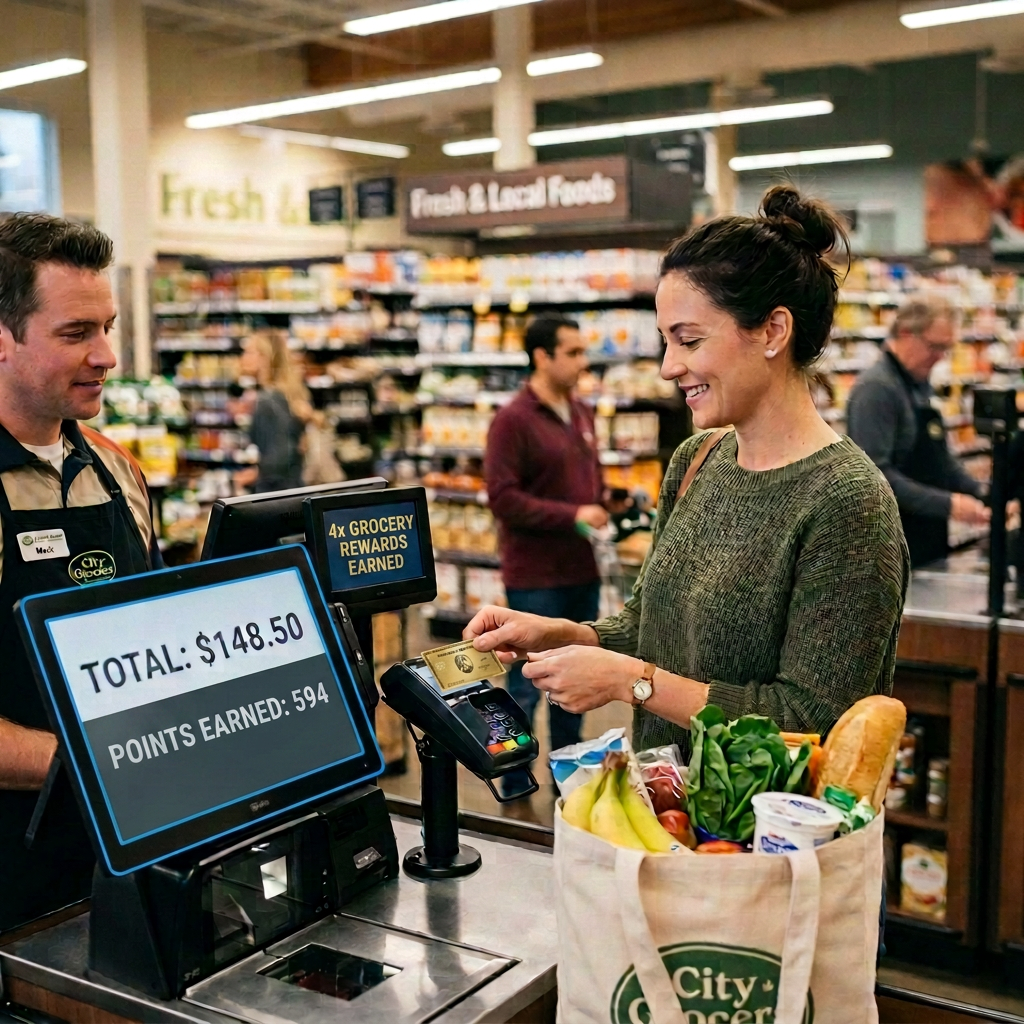
Card issuers don’t treat every place you buy food the same way. They rely on a merchant category code that gets assigned to each store, and that code decides whether your purchase actually counts as a “grocery store” purchase for bonus points.
Traditional supermarkets like Kroger, Publix, Trader Joe’s, Aldi, Safeway, and Whole Foods almost always code correctly and trigger your bonus category.
Costco, Sam’s Club, Walmart, and Target usually don’t. They’re coded as wholesale clubs or general merchandise stores, not supermarkets, so cards like the Amex Gold and Blue Cash Preferred typically won’t give you the bonus rate there even though you’re buying the exact same groceries.
If most of your shopping happens at Costco or Walmart, a dedicated supermarket card isn’t going to do much for you most of the time. The one exception is the Freedom Flex above — Chase occasionally rotates in “Wholesale Clubs” as its own bonus category, separate from groceries, so it’s worth checking your activated categories each quarter either way.
So Which One Should You Actually Get?
Start by being honest about where you actually shop. If it’s mostly traditional grocery stores, the Amex Gold or Blue Cash Preferred are going to be your best bet depending on whether you want points or cash. If Costco and Walmart make up most of your cart, skip the supermarket-specific cards and look for something built around wholesale and superstore spending instead.
Then think about what you actually want out of the rewards. If you’re chasing flights and hotel stays, points cards like the Amex Gold or Citi Strata Premier make more sense long term. If you’d rather see a lower number on your statement each month, cash back is simpler and just as valid.
And if you’re a big spender who blows past the $6,000 or $25,000 caps most of these cards put on grocery bonuses, that’s exactly when an uncapped card like the Savor earns its keep. If you’d rather not pay an annual fee at all and don’t mind checking your app once a quarter, the Freedom Flex is a solid free option to layer in alongside whichever primary card you choose.
Bottom Line
You’re going to buy groceries every single week whether you think about it or not. The only real decision is whether that spending quietly disappears or slowly builds toward your next trip. Take a look at where you actually shop, match it to the right card, and let your pantry runs start paying you back.